Mastering the Art of Healing Minds-Our Neurosurgeons Stand Tall
Craniotomy
Professional Doctor
From Pain to Possibilities-We Are the Neurosurgeons
What We Do
Precision in Every Cut-Healing With Every Touch
Conditions
Empowering the Mind-Neurosurgeons Changing the Game
Best Options
We are your Brain’s Guardian Angel
🚨 Now accepting new neurology patients | Compassionate care, expert treatment | Book your consultation today 🚨
Craniotomy
BRINGING MIRACLES TO LIFE ONE SURGERY AT A TIME
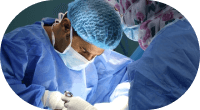
Our neurosurgeons use the most sophisticated surgical techniques and technology when performing craniotomies. Craniotomy is a surgical procedure to cut and temporarily remove a piece of skull bone (bone flap) to access the brain. After brain surgery, this bone flap is reattached to the skull at its original location with small metal plates and screws. Over time, the bone heals just like any other broken bone.
Craniotomies can vary in location and size, depending on the target that the surgeon must reach and the amount of working space needed to carry out a safe and successful operation.
Our neurosurgeons sit down with each patient to explain what kind of craniotomy will be performed in each case and to answer any questions
🧠 From Surgery to Recovery - Guiding Your Neurological Journey
Most craniotomies can be performed without any serious complications. Like any surgical procedure there are risks associated with the anaesthetic and the procedure itself
✔️ Craniotomy for Meningioma
✔️ Craniotomy for Subdural Haematoma
✔️ Craniotomy for Brain Tumour
✔️ Craniotomy for Chiari Malformation - Posterior Fossa Decompression
✔️ Craniotomy for Trigeminal Neuralgia - Microvascular Decompression
✔️ Ventriculoperitoneal Shunt - VP Shunt
Medical Quality Care
IN NEUROSURGERY, EVERY MILLIMETER MATTERS, AND EVERY DECISION SHAPES A LIFE
Craniotomies can be performed to reach a brain tumor, clip or repair an aneurysm, remove an arteriovenous malformation, drain a pus-filled pocket (abscess) within the brain, and more. Craniotomies are named on the basis of their location and corresponding bones or anatomic landmarks. The exact location of the skin incision and how much bone will be removed should be discussed with our neurosurgeon
Meningioma is a brain tumour that grows from the protective coverings of the brain, known as the meninges. These thin layers of protective tissue surround your brain and spinal cord
Subdural haematoma (SDH) is a blood clot that occurs in the subdural space, between the skull and the brain. Subdural haematomas commonly result from trauma to the head
Most brain tumours can be safely removed from the surrounding brain tissue and nerves without any serious complications. This procedure is called a craniotomy
Foramen magnum decompression or posterior fossa craniectomy, Chiari malformation is benign abnormality that results in part of brain extending into the upper spine
Microvascular decompression surgery generally aims to move the compressive blood vessel away from the trigeminal nerve
Hydrocephalus is a condition that develops when excess cerebrospinal fluid builds up within the ventricles of the brain
About Ali Neurologic
The brain is a universe
Neurosurgery is how we learn to navigate its stars
Craniotomies are the most common surgeries used to remove brain tumors. A brain tumor can put pressure on the skull or cause seizures or other symptoms. Removing a piece of the skull during a craniotomy gives the surgeon access to the brain to remove the tumor
Our neurosurgeons’ depth of knowledge and high-quality, evidence-based treatments that offer patients the best possible outcomes have received accolades from respected peer-based organizations time and again